Warmth Around the Bar
Even the finest crystal and most aromatic spiced shrub will feel clinical if illuminated by 4000K recessed ceiling downlights. Overhead fixtures cast harsh shadows under guests' eyes and flatten the rich ruby and amber hues of holiday drinks. Conversely, a counter lit solely by a flickering tealight leaves guests squinting at decanter tags.
Creating genuine Christmas warmth around a home bar is an exercise in low-kelvin horizontal light, non-shedding botanical framing, and acoustic softness that encourages guests to pour their drink and step slightly back into comfortable conversation.
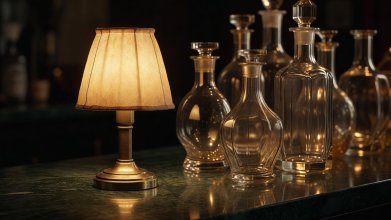
The Pleated Accent Lamp
Anchor one rear corner of your sideboard with a small corded or rechargeable brass lamp fitted with a 2200K warm-filament bulb and a parchment or pleated linen shade. The shade shields guests' eyes from glare while throwing a golden cone of task light directly onto the pouring apron.
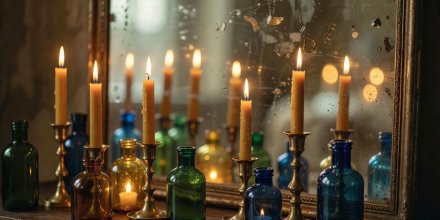
Backlighting Liquid Through Glass & Mirror
When light strikes the front of a bottle, you see only the surface label. When light originates *behind* the bottle—either from a low beeswax votive tucked safely behind a stone riser or bounced off an antique mirror leaning against the wall—every decanter becomes a glowing lantern.
Safety Rule at the Counter: Never place open taper flames along the front edge where coat cuffs move. Keep real candles exclusively along the back wall, at least 10 inches behind the pouring row, and use unscented pure beeswax so artificial vanilla or pine candle perfumes never clash with the botanical aromas of your drinks.
Food-Safe Winter Foliage vs. Toxic Holiday Plants
A serving counter is a culinary workspace. Many popular winter decorative plants sold by florists in December are either heavily sprayed with systemic fungicides or naturally toxic if their sap or berries drop into an ice bucket.
- Keep Away from the Drink Tray: Never style your bar counter with yew (Taxus baccata, whose needles and seed arils contain toxic taxine alkaloids), mistletoe berries, holly berries, poinsettia sap, or eucalyptus branches treated with floral dye.
- Welcome onto the Counter: Build your tabletop garlands and bud vases using culinary bay laurel branches, fresh woody rosemary, noble fir, Incense cedar, organic dried Seville oranges studded with whole cloves (pomanders), and branches of dried rosehips or pomegranates split on a ceramic dish.
Lighting & Botanical Styling Reference
| Atmospheric Element | Target Specification | Placement on Counter | Why It Matters for Guests |
|---|---|---|---|
| Task Lamp Bulb | 2200K Warm Amber LED (250–400 lumens) | Back left or right corner, shaded at eye level | Allows easy reading of decanter tags without blinding overhead glare. |
| Candlelight | 100% Unscented Beeswax Tapers or Heavy Votives | Back wall riser only, minimum 10" from sleeves | Provides living kinetic sparkle in cut crystal without competing scents. |
| Greenery Framing | Bay Laurel, Noble Fir, or Culinary Rosemary | Hung 14" above counter or in low heavy stoneware | Zero needle drop into open ice buckets; gentle herbal aroma. |
| Acoustic Underlay | Wool Kilim Rug + Linen Tray Liners | Underneath sideboard & beneath glass rows | Softens the sharp clink of glass and stone so the corner feels calm. |
Preventing the "Bar Camp" Bottleneck
When a corner bar is exceptionally cozy, the first three guests to pour a drink often lean against the counter and stay there for forty minutes—inadvertently blocking everyone else in the room from reaching a fresh glass.
Solve this through subtle furniture choreography: never place barstools directly against a self-serve holiday sideboard. Instead, position a pair of low-armed velvet club chairs or a cushioned window bench five to six feet away, angled toward the counter with a small side table ready to receive a glass. Guests naturally pour their drink at the counter and take two steps into the seating pocket, keeping the serving apron invitingly open all evening.