A Counter Ready for Company
The most memorable holiday drink stations rarely occupy a dedicated architectural bar room. Instead, they claim an overlooked domestic surface—a mid-century walnut credenza in the dining corner, a deep stone window ledge, a drop-leaf library table, or the far peninsula of a galley kitchen—and transform it through deliberate editing.
When a guest walks up to a seasonal counter, they are often holding a napkin or mid-conversation. If they have to reach across fragile champagne flutes to grab an ice scoop, or if there is nowhere to set down a wet spoon, the bar feels like an obstacle course. Designing a welcoming Christmas counter begins with understanding human reach, sightlines, and surface protection.
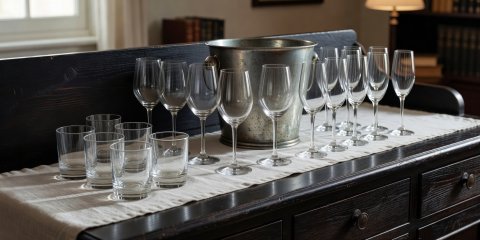
The 34-to-38 Inch Pouring Height
Standard dining tables sit around 29 to 30 inches high, which forces standing guests to stoop slightly when pouring from a heavy glass carafe or using citrus tongs. Sideboards, kitchen counters, and vintage dry sinks typically sit between 34 and 38 inches—the exact height where a host's or guest's wrists stay neutral while muddling herbs or topping a glass with soda water.
If your only available corner table is low (such as a 28-inch parlor table), build up the working deck using a two-inch thick end-grain butcher block rested on dense cork feet. Not only does this correct the posture of the station, it immediately frames the drink area as a dedicated architectural stage.
Keep 42 Inches From Doorways
Never place your holiday drink counter immediately inside the front hall or directly opposite the oven door. Position it in a room corner with at least 42 inches of standing clearance in front so two people can chat while building a drink without blocking the hallway.
Ideal Spot: Dining room alcove or bookcase flankProtecting Fine Wood from Winter Condensation & Citrus Acid
Holiday drinks involve three enemies of antique varnish and porous marble: melting ice condensation, citric acid from fresh lemon and blood orange wheels, and dark botanical pigments from pomegranate, hibiscus, and aromatic bitters. Yet wrapping a handsome piece of furniture in a plastic tablecloth strips the corner of all its intimacy.
Instead, layer natural, absorbent bar mats and trays that improve with patina:
- Heavyweight Unbleached Linen Runners: Lay a double-folded linen runner lengthwise across the center third of the sideboard. Linen absorbs stray droplets from ice buckets without looking utilitarian, and dark berry splashes wash out cleanly in warm sodium percarbonate.
- Rimmed Pewter or Spun Brass Trays: Group all liquid bottles—shrubs, floral hydrosols, simple syrups, and sparkling water—inside a tray with a half-inch vertical rim. Any drip down the neck of a decanter stays trapped on metal rather than migrating under wood grain.
- Honed Slate & Soapstone Slabs: Unlike white Carrara marble, which etches instantaneously when a single drop of lime juice or shrub vinegar touches it, dark Welsh slate and oiled soapstone are chemically inert to citrus acids. Use a 12-by-16-inch slate tile as the active cutting and garnishing pad.
Comparing Four Common Domestic Corner Surfaces
| Furniture Type | Typical Footprint | Primary Strength | Correction Needed for Holiday Service |
|---|---|---|---|
| Two-Tier Rolling Tea Cart | 30" W × 18" D | Tucks cleanly into narrow apartment corners; open visual frame. | Add silicone shelf liners to stop bottles rattling; store extra glasses on lower tier only. |
| Dining Room Sideboard | 54" W × 20" D | Generous linear width for left-to-right assembly line flow. | Protect wood veneer with slate and linen; elevate back row on a 3-inch riser. |
| Corner Secretary Desk (Drop-Front) | 34" W × 22" D | Pigeonholes hold garnish bowls, nutmeg graters, and cocktail napkins neatly. | Verify brass drop-leaf chains support the weight of filled glass pitchers (12+ lbs). |
| Kitchen Peninsula End-Cap | 36" W × 24" D | Waterproof quartz or stone deck; close to sink for quick glass rinsing. | Screen off kitchen prep clutter using a low cedar arrangement and warm table lamp. |
The Self-Service Sequence: Left-to-Right Choreography
In Western reading cultures, guests instinctively scan a table from left to right. When you arrange a corner counter in reverse—putting ice on the far right and glasses in the middle—guests cross arms and hesitate. Follow a strict five-step horizontal rhythm:
1. The Vessel Zone (Far Left): Clean glassware grouped by silhouette, accompanied by a stack of four-inch linen or heavy paper cocktail napkins. Taking a glass and a napkin is the guest's opening gesture.
2. The Thermal Zone (Center-Left): An insulated ice bucket with spring tongs (never a scoop that buries its handle in the ice) alongside any slow-warmed thermal carafe for mulled drinks.
3. The Base Pour Zone (Center): Your two hero non-alcoholic bases in clear, tagged decanters, flanked by smaller dasher bottles of gentian, cardamom, or orange bitters.
4. The Lengthener & Finish Zone (Center-Right): Chilled bottles of small-bubble soda water, dry ginger beer, or tonic, plus a small ceramic dish holding a bar spoon for gentle stirring.
5. The Botanical & Discard Caddy (Far Right): Pinch bowls of citrus wheels, rosemary skewers, a whole nutmeg with a miniature microplane, and—crucially—a small brass bowl labeled for used stirrers, squeezed wedges, and bottle caps.